Introduction
Bringing a Musical Instrument on a Private Charter From Florida
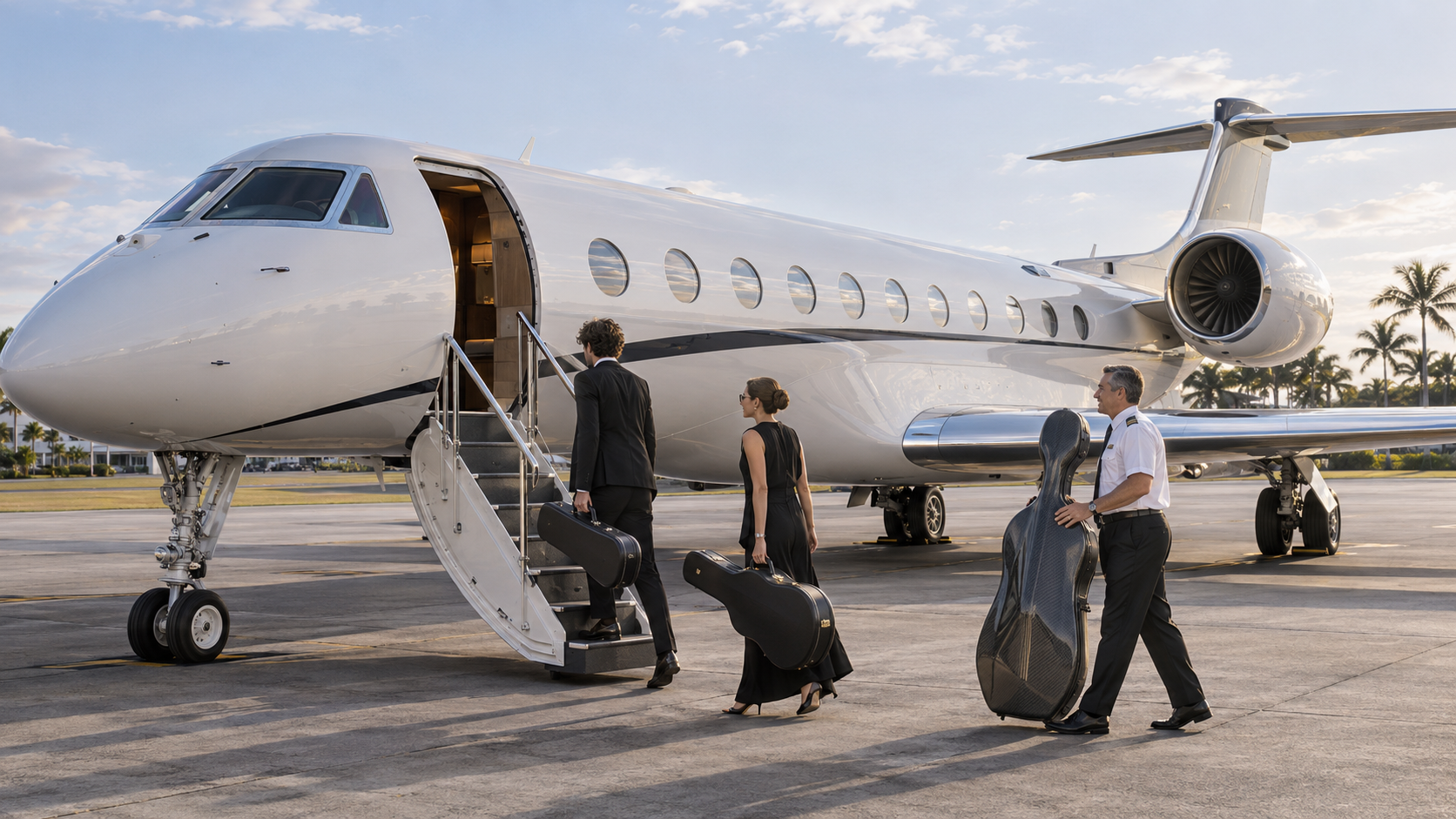
Treat an instrument as a specific carriage requirement when requesting a private flight. Send the case dimensions, weight and handling needs before selecting the aircraft. Available baggage volume alone does not prove that a case will fit through the door or can be secured where you want it.
For a performance, recording session or personal journey, the instrument may matter as much as the passenger itinerary. The operator needs enough detail to assess both together.
Describe the case that will actually travel
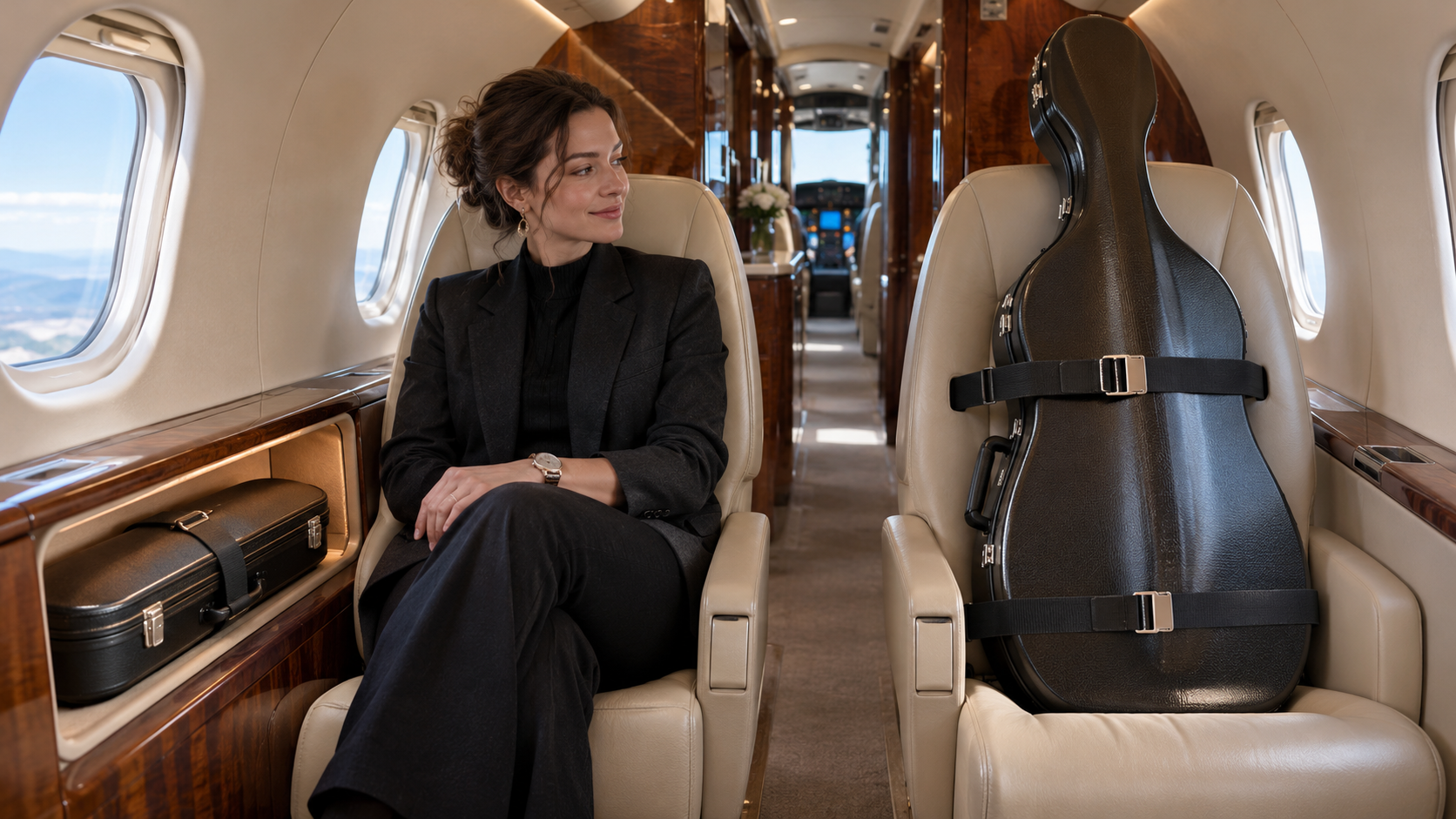
Measure the packed case, including protruding handles or wheels, and provide its weight. Send photographs showing the shape and how it opens. Identify whether it must remain upright, requires particular handling or needs to travel in the cabin.
List every other bag and passenger as well. An aircraft that can accommodate one large case for two travelers may not support the same arrangement with a full party and their luggage.
Use EE's private jet charter service to submit the requirement with the route and dates. Approval must come from the operator for the proposed aircraft; a general charter inquiry is not carriage confirmation.
Ask where and how it will be carried
Request a clear answer about the proposed location and securing method. Do not assume an instrument may occupy an empty passenger seat, lie in an aisle or remain on a passenger's lap. A larger cabin does not remove the need for an approved stowage arrangement.
If a baggage compartment is proposed, ask the operator to confirm the conditions and access relevant to the instrument. Tell the operator which requirements are essential rather than accepting “it should fit” as the final answer.
For a delicate or high-value item, discuss handling and protection requirements with the appropriate instrument specialist and insurer separately. A carriage acceptance is not a promise that every type of damage or loss is covered.
Include the ground journey
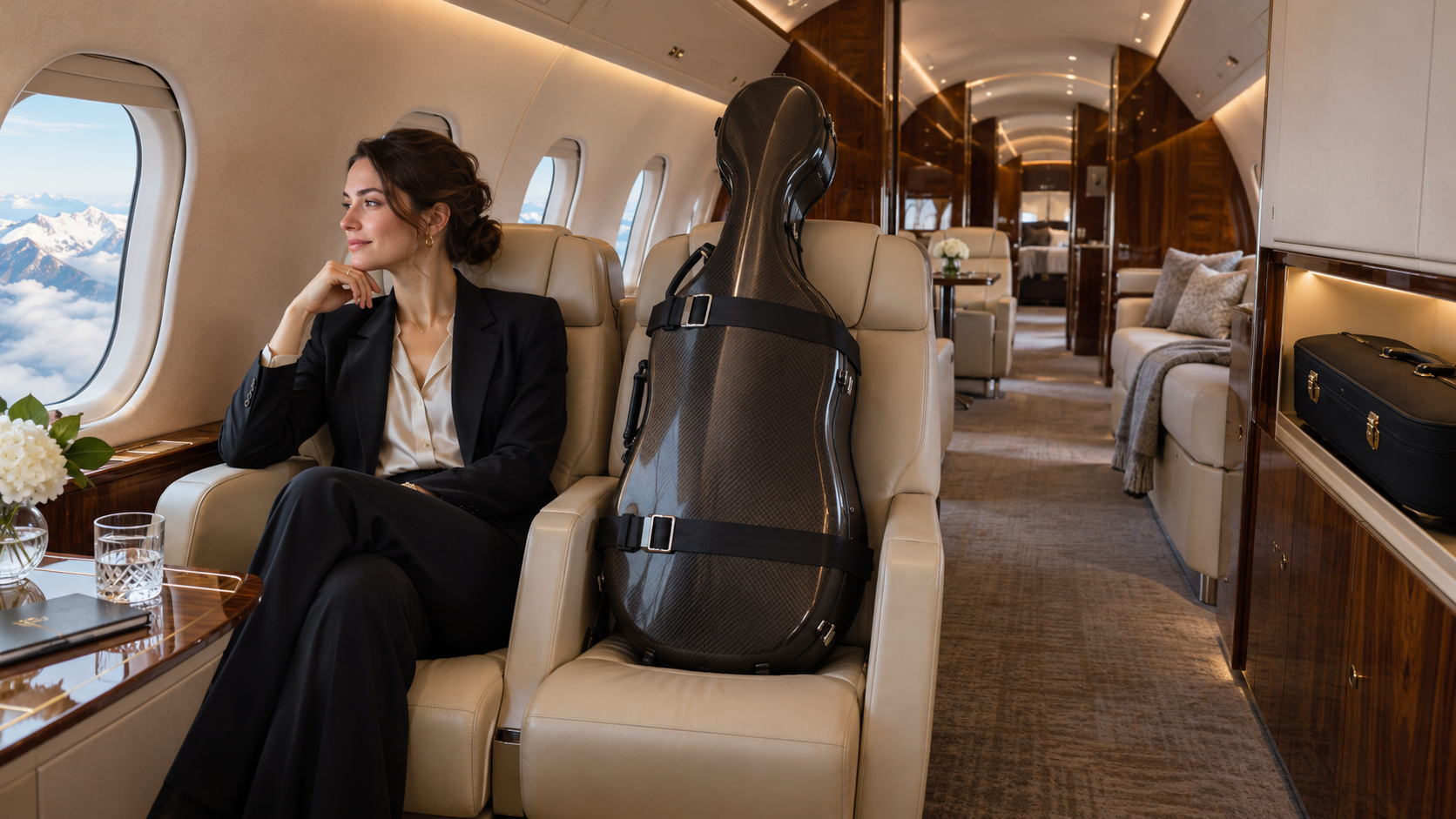
The case must also fit in the vehicle to and from the aircraft. Provide the same measurements when arranging chauffeur transport, and identify who will help load and unload it. Avoid discovering at the airport that the flight can accommodate a cello but the reserved sedan cannot.
Allow time for an orderly handover. Keep the case identified, clarify who takes custody and retain necessary contact details. If the flight involves borders, flag the instrument and any material-related documentation questions early for qualified review.
Reconfirm after any aircraft change
An accepted plan belongs to the approved aircraft and configuration. If a substitute is proposed, ask the operator to reassess the instrument before agreeing to the change. Similar passenger capacity does not establish equivalent carriage space.

Frequently Asked Questions
Can a cello travel on a seat?
Only if the operator approves the specific arrangement. Do not treat an unused seat as automatic permission.
Can a small instrument stay in the cabin?
Request cabin carriage explicitly and obtain a confirmed stowage plan.
Do I need to disclose the instrument before receiving a quote?
Yes. Its dimensions and requirements may affect which aircraft is suitable.
Request a flight built around the instrument
Send EE your route, dates, passengers, case dimensions and required carriage conditions. Ask for operator confirmation of both aircraft suitability and the connected ground-transport plan.
You can also call Energetic Exotics at 888-717-5157.

You Might Also Like

Hotel Concierge vs Direct Car-Service Booking

Exotic Rental Cancellation and Rescheduling: How It Works